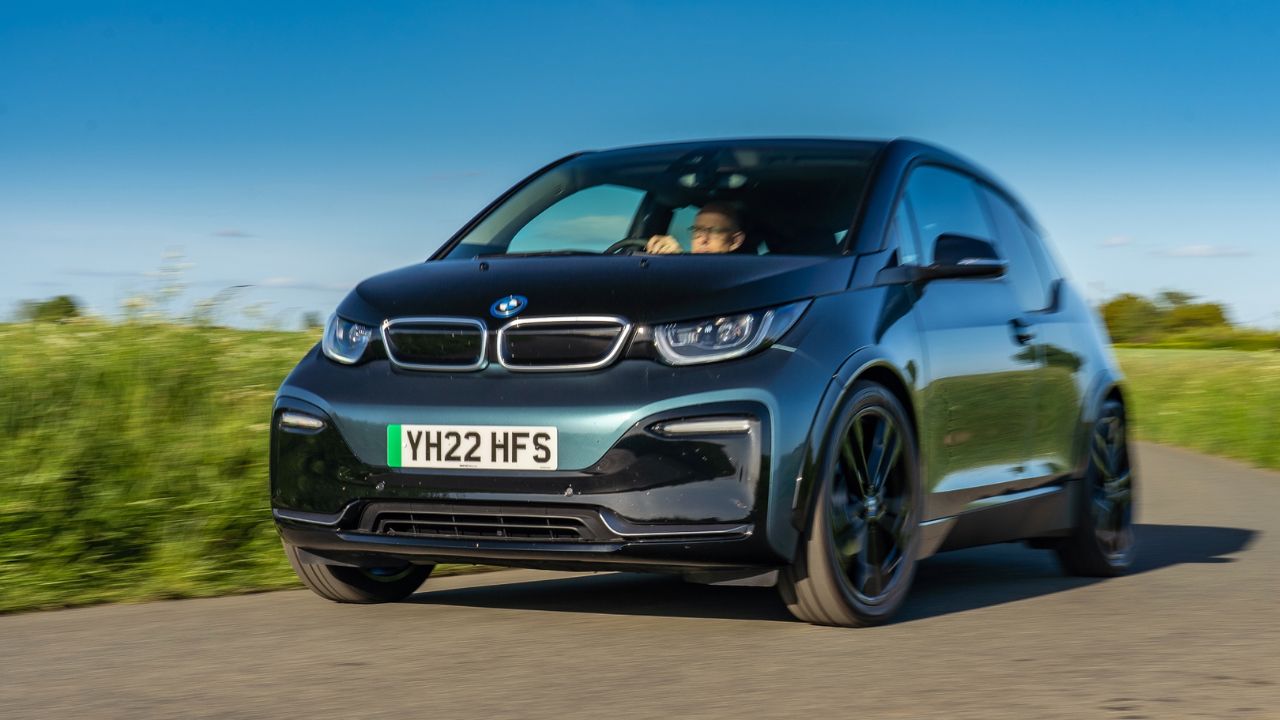
The BMW i3 arrived on the global stage not just as another vehicle, but as a bold statement of what the future of transportation could look like. Launched in 2013, it was a radical departure from the traditional luxury sedans that defined the Bavarian automaker for decades. Instead of heavy steel and roaring engines, the i3 introduced a lightweight carbon-fiber-reinforced plastic (CFRP) chassis and a whisper-quiet electric drivetrain.1 It was designed from a “clean sheet” perspective, specifically optimized for the tight corners and high demands of metropolitan life. Over its nearly decade-long production run, the i3 became more than just a car; it served as a laboratory on wheels, proving that sustainability and driving pleasure could coexist in a compact, avant-garde package.
A Masterclass in Lightweight Engineering
What truly set the BMW i3 apart from its contemporaries was its revolutionary LifeDrive architecture. While most manufacturers were simply swapping internal combustion engines for batteries in existing frames, BMW engineered a two-part structure. The “Drive” module, made of aluminum, housed the heavy battery pack and electric motor, keeping the center of gravity low for agile handling.2 Above it sat the “Life” module—a high-strength, incredibly light passenger cell made entirely of CFRP.3 This exotic material, usually reserved for supercars, allowed BMW to offset the weight of the batteries.4 The result was a vehicle that felt light on its feet, offering a nimble and responsive driving experience that remains a benchmark for urban EVs today.
Technical Specifications and Performance
To understand the evolution of the i3, one must look at how its battery technology matured over time. While the original 2014 models focused primarily on short city hops, later iterations like the 120 Ah (42.2 kWh) version significantly expanded its usability. Below is a detailed look at the performance data for the final production variant:
| Feature | Specification (BMW i3 120 Ah) |
| Battery Capacity | 42.2 kWh (Gross) / 37.9 kWh (Net) |
| Electric Range (WLTP) | Approximately 285–310 km (177–193 miles) |
| Power Output | 125 kW (170 hp) |
| Top Speed | 150 km/h (93 mph) |
| 0–100 km/h Acceleration | 7.3 Seconds |
| Charging (AC 11 kW) | ~3.2 Hours (0 to 80%) |
| DC Fast Charge (50 kW) | ~40 Minutes (0 to 80%) |
Sustainability Beyond the Exhaust Pipe
BMW’s commitment with the i3 went far beyond the lack of a tailpipe. The car was a pioneer in circular economy principles before they became industry buzzwords. The interior was a gallery of eco-friendly innovation, featuring door panels made from kenaf fibers, dashboard trim crafted from open-pore eucalyptus wood, and seat fabrics derived from recycled plastic bottles. Even the production process was green; the Leipzig plant where the i3 was assembled was powered entirely by on-site wind turbines.5 This holistic approach to environmental impact ensured that the car’s carbon footprint was minimized from the assembly line to the scrapyard, making it a favorite for the environmentally conscious professional.
Radical Design and Functional Space
Visually, the i3 was—and still is—unmistakable. Its “tall-boy” stance and short overhangs maximize interior volume within a tiny footprint, making it effortless to park in crowded city centers. One of its most iconic features is the coach doors (rear-hinged doors), which open to reveal a spacious cabin without a B-pillar.6 This design choice provides an airy, lounge-like feel and makes entry and exit remarkably easy. The interior layout, characterized by a flat floor and minimalist dashboard, reinforces the sense of modern luxury. It didn’t try to look like a “normal” car; it embraced its identity as a futuristic tool for a new era of mobility.
The Role of the Range Extender (REx)
In the early days of “range anxiety,” BMW offered a clever solution: the Range Extender (REx).7 This was a small, two-cylinder gasoline engine that didn’t drive the wheels but acted as a portable generator to keep the battery charged when it ran low.8 This bridge technology allowed many hesitant buyers to make the leap to electric, knowing they had a safety net for longer journeys. While the REx was eventually phased out in many markets as battery densities improved and charging infrastructure grew, it remains a testament to BMW’s pragmatic approach to solving the hurdles of early electric vehicle adoption.
Legacy and the Shift to the “Neue Klasse”
Production of the BMW i3 officially concluded in mid-2022, but its influence is still felt across the entire BMW lineup. The lessons learned in carbon fiber manufacturing, battery management, and aerodynamic efficiency have been integrated into newer models like the iX and the i4. The i3 proved that an electric car could be premium, quirky, and fun all at once. It paved the way for the upcoming “Neue Klasse” platform, BMW’s next generation of electric vehicles. For many enthusiasts, the i3 remains a cult classic—a visionary machine that was perhaps years ahead of its time, successfully redefining what a premium city car should be.
Final Thoughts on an Electric Icon
As we look back at the history of electric mobility, the BMW i3 stands out as a fearless experiment that paid off. It challenged the status quo of automotive design and pushed the boundaries of material science. While newer EVs may offer more range or faster charging, few can match the i3’s unique blend of architectural innovation and sustainable soul. It remains a shining example of how a legacy automaker can successfully pivot toward the future by daring to be different. The i3 didn’t just participate in the electric revolution; it led the charge from the front.

FAQs
Q1. Is the BMW i3 still in production?
No, BMW officially ended production of the i3 in July 2022.9 However, it remains highly sought after in the pre-owned market due to its unique design and durable carbon-fiber construction.
Q2. How long does it take to charge a BMW i3?
Charging times vary by model and power source. Using a standard 11 kW home wallbox, a 120 Ah model takes about 3 to 4 hours to reach 80%. On a 50 kW DC fast charger, you can reach 80% in approximately 40 minutes.10
Q3. Does the BMW i3 have a gasoline engine?
The standard i3 is a Battery Electric Vehicle (BEV). However, some versions include a “Range Extender” (REx), a small gasoline generator that provides extra power when the battery is low, though it does not directly power the wheels.11
Disclaimer
The content is intended for informational purposes only. you can check the officially sources our aim is to provide accurate information to all users