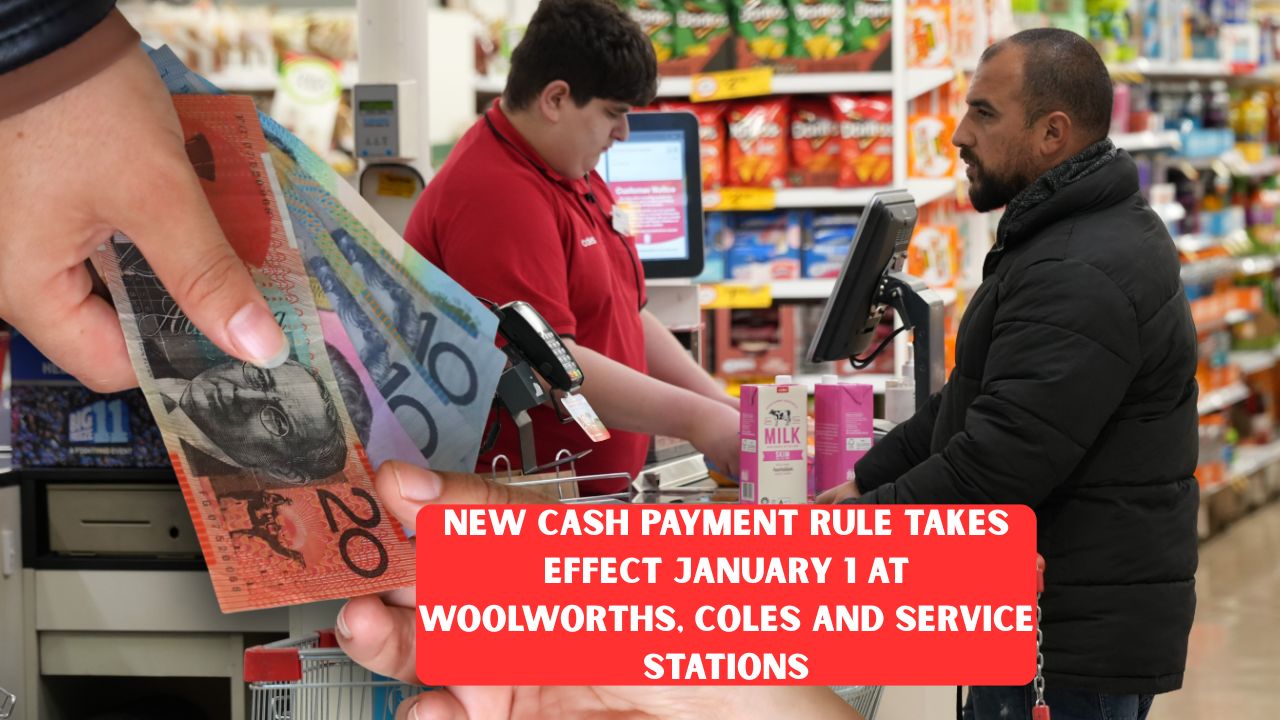
As the calendar turns to January 1, 2026, a significant shift in Australia’s retail landscape has officially begun. Major grocery chains and fuel retailers, including industry giants Woolworths and Coles, are now legally required to accept physical currency for essential purchases. This new federal mandate, spearheaded by the Treasury, aims to protect the financial inclusion of millions of Australians who still rely on notes and coins for their daily needs. While the world has trended toward a “cashless society,” this legislative move serves as a vital safety net, ensuring that digital outages or a lack of banking access do not prevent citizens from obtaining food and fuel.
The Scope of the New Cash Mandate
The regulation is specifically designed to cover “essential” transactions. Under the new rules, businesses categorized as grocery or fuel retailers must accept cash for any in-person transaction valued at $500 or less. This applies primarily during peak operating hours, specifically between 7:00 AM and 9:00 PM. The goal is to ensure that the vast majority of daily shopping trips remain accessible to everyone, regardless of their preferred payment method. This change comes after years of public concern regarding the “de-banking” of regional areas and the increasing number of “card-only” signs appearing at checkout counters.
Why This Change Is Happening Now
The Australian government, led by Treasurer Jim Chalmers, introduced this mandate following extensive public consultation that saw thousands of submissions from concerned citizens. Two primary factors drove the decision: resilience and inclusivity. In recent years, Australia has experienced significant telecommunications outages and natural disasters that rendered digital payment systems useless. During these times, cash proved to be the only reliable medium of exchange. Furthermore, roughly 1.5 million Australians are considered “cash-dependent,” including many senior citizens, low-income earners, and people living in remote areas with unreliable internet.
Key Details of the Cash Acceptance Rule
| Feature | Details and Limitations |
| Effective Date | January 1, 2026 |
| Applicable Retailers | Major Supermarkets (Coles, Woolworths, Aldi) & Service Stations |
| Transaction Limit | Up to $500 per in-person transaction |
| Required Hours | Daily between 7:00 AM and 9:00 PM |
| Small Business Exemption | Turnover under $10 million (unless branded under a major chain) |
| Compliance Penalty | Fines of up to $55,000 for repeat corporate offenders |
Impact on Major Retailers Like Woolworths and Coles
For retail giants like Woolworths and Coles, this rule necessitates a reversal of the recent trend toward card-only self-service kiosks. While many stores had already begun phasing out cash-handling machines to save on security and processing costs, they must now ensure that cash-capable checkouts are available and staffed during the mandated hours. This includes maintaining sufficient “float” (change) in registers and ensuring staff are trained in counterfeit detection and cash reconciliation. For consumers, this means the return of the “Cash Accepted” sign, providing a sense of certainty that their legal tender will not be refused at the counter.
Exemptions and Small Business Protections
It is important to note that the mandate does not apply to every business in Australia. The government has focused strictly on “essentials”—food and transport. Consequently, department stores, clothing boutiques, and electronics retailers are not currently bound by these specific rules. Additionally, small businesses with an annual aggregate turnover of less than $10 million are exempt. This protection ensures that local “mom-and-pop” shops are not burdened by the high costs of cash security and transport if they do not have the volume to justify it. However, if a small business operates under a major franchise trademark (like a branded service station), they are generally expected to comply.
The Role of Service Stations and Regional Access
Service stations play a critical role in this new landscape, especially in regional Australia. For many travelers and transport workers, the “servo” is the only place to get fuel and basic supplies for hundreds of kilometers. EFTPOS outages in the outback can leave motorists stranded if cash is not accepted. By mandating cash acceptance at these locations, the government is providing a “liquidity guarantee” for the transport sector. This ensures that even during a regional power failure or satellite link issue, the economy keeps moving and people can get home safely.
Future Outlook and the Three-Year Review
The government has committed to reviewing the effectiveness of this mandate after three years. During this period, they will monitor whether the $500 limit is appropriate and if the list of “essential” goods needs to be expanded to include other sectors like pharmacies or hardware stores. For now, the focus remains on stabilizing the use of cash in the most critical parts of the economy. While digital payments continue to offer convenience, the events of early 2026 prove that the Australian government still views physical money as a fundamental right for its citizens.
FAQs
Q1 Can a supermarket still refuse cash for a $600 grocery bill?
Yes. The current mandate only requires retailers to accept cash for in-person transactions of $500 or less. For amounts exceeding this, businesses may still request digital payment.
Q2 Does this rule apply to 24-hour service stations at midnight?
The mandatory requirement currently applies between the hours of 7:00 AM and 9:00 PM. Outside of these hours, businesses may exercise more discretion regarding cash for security reasons.
Q3 Are small local cafes required to take cash under this law?
Generally, no. The mandate targets grocery and fuel retailers. Most cafes and small businesses with a turnover under $10 million remain exempt from the mandatory requirement.
Disclaimer
The content is intended for informational purposes only. you can check the officially sources our aim is to provide accurate information to all users