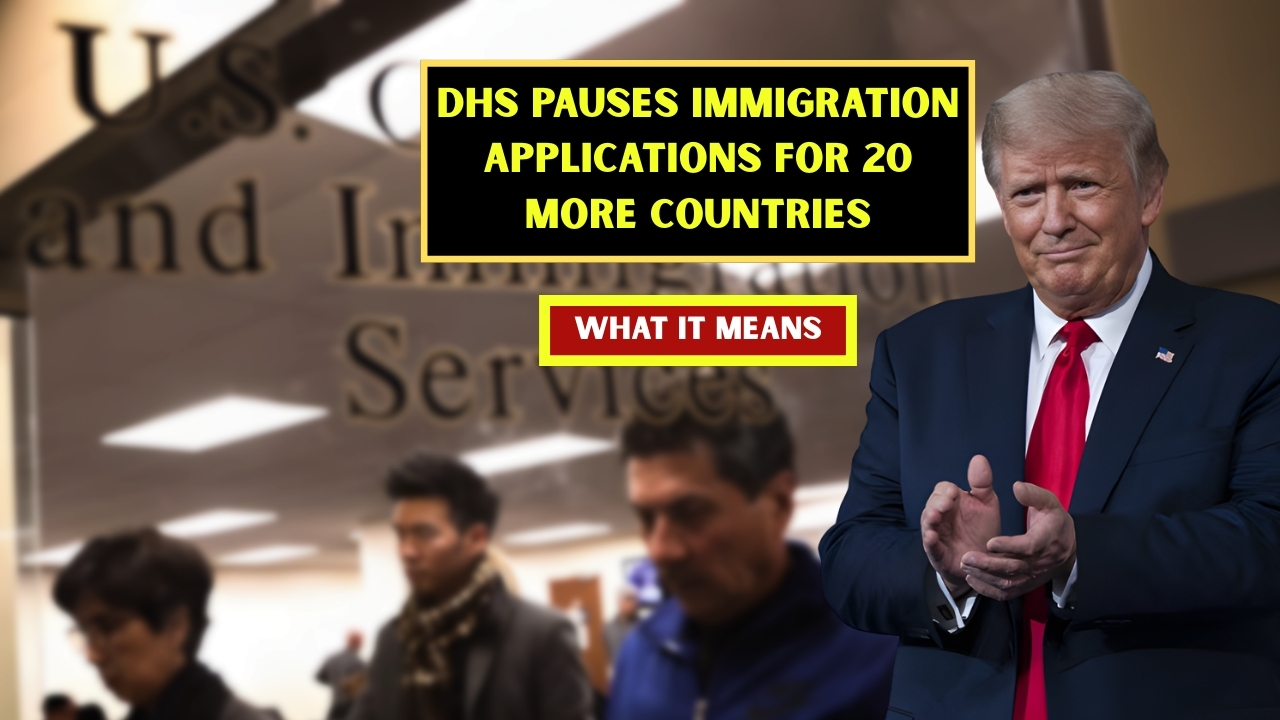
In a significant shift to U.S. border policy, the Department of Homeland Security (DHS) has officially paused all pending immigration applications for nationals from an additional 20 countries, effective January 1, 2026. This directive from U.S. Citizenship and Immigration Services (USCIS) expands existing restrictions, bringing the total number of nations facing full or partial immigration halts to 39, plus the Palestinian Authority.
The Scope of the Application Freeze
The pause is a comprehensive freeze on the adjudication of legal immigration benefits. If you or a family member are from one of the newly designated “high-risk” nations, the following application types are currently halted:
-
Visas and Green Cards: Both family-sponsored and employment-based immigrant visas.
-
Naturalization: All pending applications for U.S. citizenship (N-400).
-
Adjustment of Status: Applications to change legal status while within the U.S. (I-485).
-
Asylum: A total hold on all asylum case processing (I-589) to address security vetting and backlogs.
Why the Pause Was Implemented
The administration cited national security and public safety as the primary drivers for the expansion. A USCIS memorandum released in early January stated that the agency must ensure applicants do not pose risks, specifically targeting countries with “high overstay rates” or “significant fraud.” The move followed the late-2025 arrest of an Afghan national involved in a violent incident, which triggered a broader review of vetting procedures for all “high-risk” nationalities.
Impacted Countries (Partial List)
While the full list covers 39 nations, the 20 most recently added countries are predominantly located in Africa and the Middle East. Confirmed nations include:
-
Angola, Nigeria, Senegal, Tanzania, and Zimbabwe.
-
Antigua and Barbuda, Benin, Cote d’Ivoire, Dominica, and Gabon.
-
Malawi, Mauritania, Tonga, and Zambia.
Re-Review of Cases Since 2021
Perhaps the most jarring aspect of the new policy is the retroactive review. USCIS has been directed to re-evaluate immigration cases and refugee admissions dating back to January 20, 2021. This means that individuals who have already been living in the U.S. legally for several years could have their status reopened for “enhanced vetting,” including social media screening and biometric cross-checks with foreign databases.
Key Exceptions to the Rule
The DHS has outlined very narrow exemptions to this pause to ensure international commitments are met during this high-profile year for the United States. Exceptions include:
-
Athletes and Personnel: Individuals participating in the 2026 World Cup and the 2026 Winter Olympics, both of which feature significant U.S. hosting components.
-
National Interest Waivers: Case-by-case exceptions granted by the Secretary of State or DHS if the travel serves a specific U.S. national interest.
2026 Immigration Policy Summary
| Feature | Details |
| New Countries Added | 20 (Totaling 39 + Palestinian Authority) |
| Effective Date | January 1, 2026 |
| Application Types | Green Cards, Citizenship, Asylum, Work Visas |
| Retroactive Scope | All cases approved since Jan 2021 |
Frequently Asked Questions
1. Does this mean my current visa is revoked?
Generally, no. The proclamation states that visas issued before January 1, 2026, will not be revoked. However, if you are from a listed country, you may face significant hurdles when trying to renew your status or re-enter the U.S. after travel abroad.
2. I have lived in the U.S. as a refugee since 2022. Am I at risk?
The USCIS has announced it will “re-review” the status of all refugees admitted under the previous administration. While this does not mean immediate deportation, it does mean your case could be reopened for additional security screening.
3. Will the pause end once the backlog is cleared?
The current memorandum lists the pause as indefinite. The administration has tied the resumption of adjudications to the implementation of “rigorous, security-focused screening” and improved cooperation from the governments of the listed countries.
Disclaimer
The content is intended for informational purposes only. You can check the officially sources our aim is to provide accurate information to all users. For the most current list of restricted countries and official policy memorandums, please consult the U.S. Citizenship and Immigration Services (USCIS) and the U.S. Department of State.