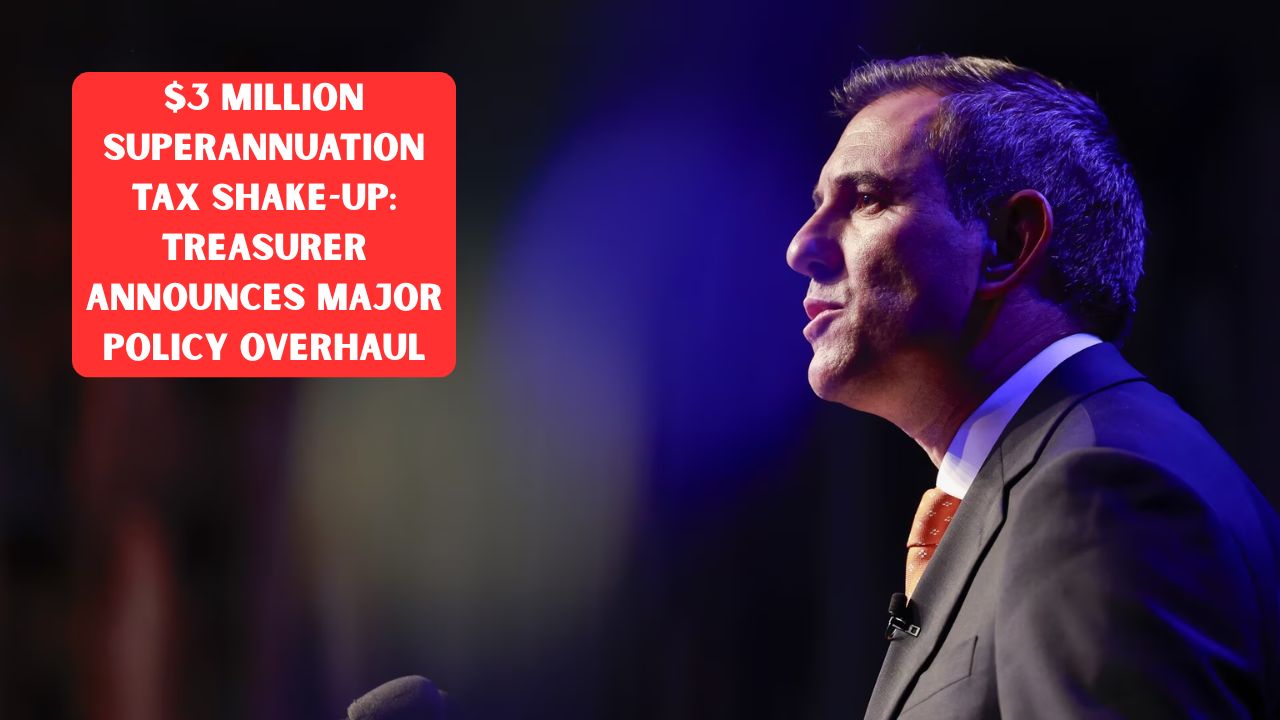
The Australian retirement landscape is entering a transformative era as Treasurer Jim Chalmers recently unveiled a comprehensive overhaul of the nation’s superannuation tax concessions.1 Initially proposed in 2023, the reform—often referred to as the Division 296 tax—has undergone significant revisions following intense consultation with industry stakeholders and the public.2 These adjustments aim to balance the budget while ensuring the superannuation system remains a sustainable vehicle for retirement rather than a tax-sheltered investment house for the ultra-wealthy.3 With the implementation date now set for July 1, 2026, the government is signaling a shift toward a more progressive and fairer retirement framework.4
The Shift to a Tiered Tax Structure
In a major departure from the original “one-size-fits-all” approach for high-balance holders, the Treasurer has introduced a tiered system.5 While the primary focus remains on those with more than $3 million in total superannuation, a new high-end tier has been established for balances exceeding $10 million.6 This creates a more granular tax environment where the wealthiest Australians contribute more proportionately.7 Under this revised policy, earnings on the portion of a balance between $3 million and $10 million will be taxed at an effective rate of 30%, while earnings on balances above $10 million will face a 40% tax rate.8
Removing the Unrealised Gains Controversy
Perhaps the most significant victory for critics and Self-Managed Super Fund (SMSF) trustees is the government’s decision to abandon the taxation of unrealised capital gains.9 The initial proposal would have seen Australians taxed on “paper profits”—increases in asset value before the asset was actually sold.10 This sparked widespread concern over liquidity, particularly for funds holding illiquid assets like commercial property or farmland. The updated policy ensures that tax is only applied to realised earnings, such as dividends, rent, and capital gains from sold assets, aligning the system with standard income tax principles.11
Key Features of the Superannuation Tax Reform
The following table summarizes the primary changes coming to high-balance superannuation accounts starting in mid-2026.
| Feature | Old Proposal (2023) | Updated Policy (2026) |
| Start Date | July 1, 2025 | July 1, 2026 |
| $3M – $10M Rate | 30% | 30% |
| Over $10M Rate | 30% | 40% |
| Earnings Type | Unrealised + Realised | Realised Only |
| Indexation | Not Included | Indexed to CPI |
| Low Income Relief | Minimal | Expanded LISTO |
Protecting Against Bracket Creep via Indexation
Another pivotal update is the commitment to index the thresholds.12 Critics argued that a static $3 million cap would eventually catch middle-income earners as inflation and natural investment growth pushed balances upward over decades. To prevent this “bracket creep,” the government has confirmed that both the $3 million and $10 million thresholds will be indexed to the Consumer Price Index (CPI).13 This ensures the policy remains targeted at the top 0.5% of earners, providing long-term certainty for those currently building their retirement nest eggs.
Balancing the Bottom: Support for Low-Income Earners
To reinforce the narrative of fairness, the Treasurer has coupled these high-end tax increases with a boost for the nation’s lowest earners. The Low Income Superannuation Tax Offset (LISTO) is being significantly expanded.14 Starting July 1, 2027, the eligibility threshold for this offset will rise from $37,000 to $45,000.15 Additionally, the maximum payment will increase from $500 to $810.16 This move is specifically designed to support women and young workers, ensuring they aren’t paying more tax on their superannuation contributions than they do on their take-home pay.
Practical Implications for Retirees and Trustees
For the vast majority of Australians—more than 99%—these changes will have zero direct impact. However, for those nearing the $3 million mark, the new rules necessitate a review of investment strategies.17 Because the tax is assessed at the individual level across all accounts, splitting contributions with a spouse or rebalancing assets between partners remains a viable strategy to stay below the threshold.18 The delay in implementation until 2026 provides a critical window for financial advisors and trustees to audit their portfolios and prepare for the administrative shift toward reporting realised earnings.19
Looking Ahead to 2026
As the legislation moves toward formal introduction in Parliament, the focus shifts to compliance and the technicalities of how “realised earnings” will be defined for pooled funds versus SMSFs. Treasurer Chalmers has framed these changes as “pragmatic and practical,” aimed at repairing the budget without undermining the fundamental goal of superannuation. By listening to feedback on unrealised gains and indexation, the government has arguably created a more politically viable path for one of the most significant structural changes to the super system in a generation.

FAQs
Q1. When will the first tax bills be issued under the new rules?
Since the policy begins on July 1, 2026, the first testing point for balances will be June 30, 2027.20 Consequently, the first tax assessments are expected to be issued during the 2027-2028 financial year.21
Q2. Can I pay the extra tax using my super fund or do I have to pay out-of-pocket?
Impacted individuals will have the choice to either pay the additional tax personally or elect to have the amount released from their superannuation fund.22
Q3. Does the $3 million threshold apply to a couple or per person?
The threshold is applied on an individual basis. This means a couple could potentially hold up to $6 million combined ($3 million each) before the additional Division 296 tax applies.23
Disclaimer
The content is intended for informational purposes only. you can check the officially sources our aim is to provide accurate information to all users