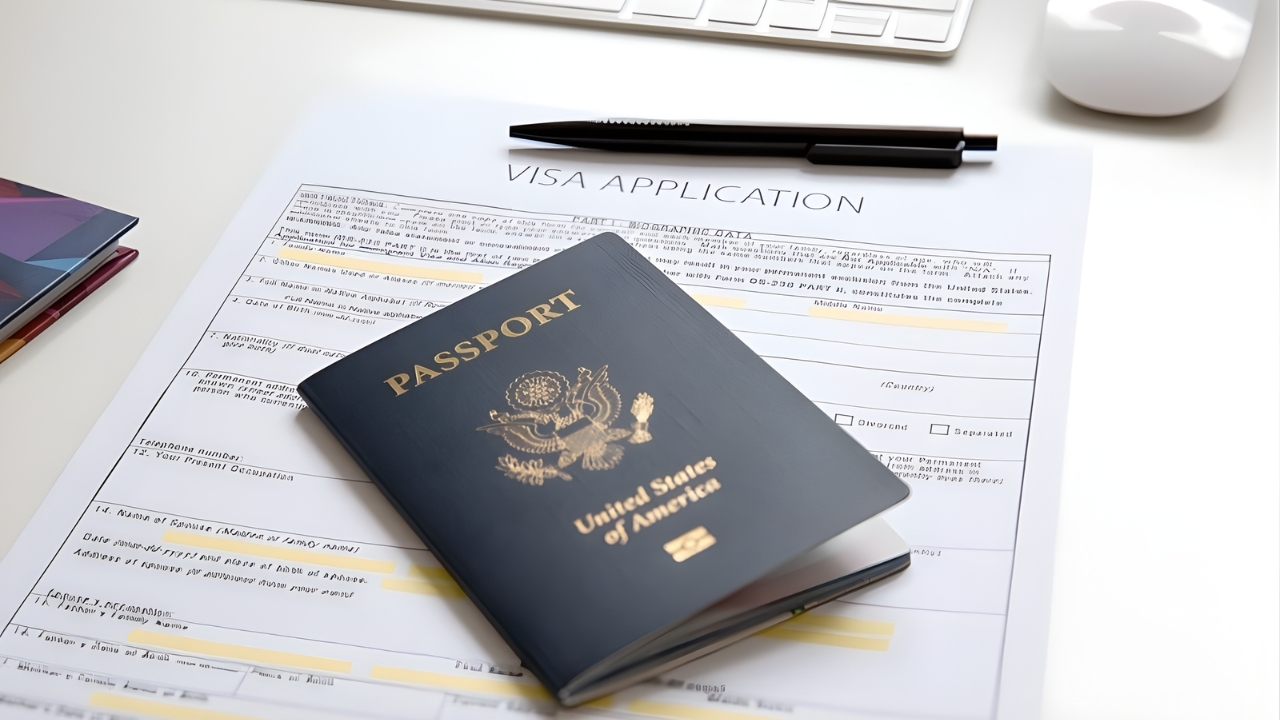
Although the passport and visa are usually mandatory documents that international visitors need to travel to the United States, there is a body of laws that governs the entry of specific foreign nationals into the nation by using other secure documents (Western Hemisphere Travel Initiative). These exemptions will be open mostly to citizens of adjacent nations and certain already-approved groups of travelers as of 2026, which will ease crossings over land and sea.
The Power of the NEXUS Card
The NEXUS card will represent the most flexible foreigner passport substitute in 2026. This is a joint issue of the U.S. Customs and Border Protection (CBP) and the Canada Border Services Agency (CBSA) giving authorized Canadian citizens, who are low-risk, permission to enter the U.S. by land, sea or air without carrying a conventional passport. Most of the alternative documents required only border on the land and NEXUS, on the other hand, can be used at designated kiosks at larger Canadian airports and within the U.S. Preclearance locations. It is a stand-alone evidence of not only identity but also citizenship, and greatly cuts down wait time among frequent passengers.
Enhanced Drivers Licenses (EDL)
A national Enhanced Driver’s License (EDL) becomes a valid alternative to a passport in terms of entering the U.S. either by sea or land among the citizens of Canada who live in particular provinces (e.g., Ontario, British Columbia or Manitoba). The radio frequency identification (RFID) chip and machine-readable zone are included in these licenses and can enable the border agents to check the citizenship and identity of the traveler in real time. It should be mentioned that, although an EDL will work across the border or even in a ferry, it is never recognized as needed in the international air travel into the United States.
The Border Crossing Card (BCC)
Mexican nationals are allowed to do away with the conventional visa-passport two-step process by carrying a Border Crossing Card (BCC), or laser visa. This credit card-sized document is both a B1/B2 visitor visa and a separate document to use as an entry requirement both on land and on sea. The BCC also enables Mexican nationals to transit within the so-called border zone (which typically extends to 2555 miles along the boundary) without using a passport and spend up to 30 days at the location. Nonetheless, when a traveler wishes to fly into the U.S. or even into the inland further, an authentic Mexican passport should be carried with him or her in addition to the BCC.
Special Provision to Children
U.S. has a significant exception on the minors of Canada and Mexico in an effort to make travelling with their families easier. Young persons who are below 16 (or 19, when accompanied by a supervised youth group) years old can cross the U.S. border by sea and land ports of entry with only an original or certified copy of their birth certificate or Consular Report of Birth Abroad. This exemption is based on the fact that a significant number of children lack their own passports and thus allows them to cross the border on day trips or vacations carrying simple evidence of citizenship.
Closed-Loop” Cruise Exceptions
There is a special provision when it comes to the visitors on closed-loop cruises – voyages that leave and arrive at the same port in the U.S. (e.g. Miami to the Caribbean and back). The regulations permit U.S. Lawful Permanent Residents (Green Card holders) to frequently re-enter the country with just a Permanent Resident Card (I-551). Although the cruise lines and individual islands might strongly insist on a passport as long as they are subjected to an emergency air travel, according to the U.S. government, these residents may legally enter the country at the pier without a passport, provided their status is legitimate, and they have not been out of the country more than one year.
Passport-Free Entry 2026 Qualified
| Document Type | Eligible Group | Permitted Travel Mode |
| NEXUS Card | Pre-approved Canadians | Air, Land, and Sea |
| Enhanced Driver’s License | Select Canadian Provinces | Land and Sea Only |
| Border Crossing Card | Mexican Citizens | Land and Sea (Border Zone) |
| Birth Certificate | Canadian/Mexican Minors | Land and Sea Only |
| Green Card (I-551) | U.S. Permanent Residents | Land and Sea (Closed-Loop) |
Frequently Asked Questions
1. Would my NEXUS card allow me to travel to the United States of America by air?
No. NEXUS card is not a legitimate passport replacement to air travel in any case other than in direct flights between a Canadian airport (participating in the U.S. Preclearance program) and the United States. In the case of other international flights, a passport is needed.
2. Are Enhanced Drivers License and REAL ID Equivalent?
No. An EDL is, however, REAL ID-compliant, whereas a standard REAL ID is not an international one, but can be used to travel within the country. International land entry is only made possible under the “Enhanced” version (only offered in some selected border states/provinces).
3. Does the Border Crossing Card permit me to work in the U.S?
No. The BCC is purely business and tourism (B1/B2 purposes). Working with the usage of a BCC is a breach of your status and may result in the immediate loss of the card.
Disclaimer
The information is not meant to be informative. You may verify that we are official and we do not want to give any inaccurate information to any of the users. To have the most up-to-date entry requirements, consult the U.S. Customs and Border Protection (CBP), and the U.S. Department of State.