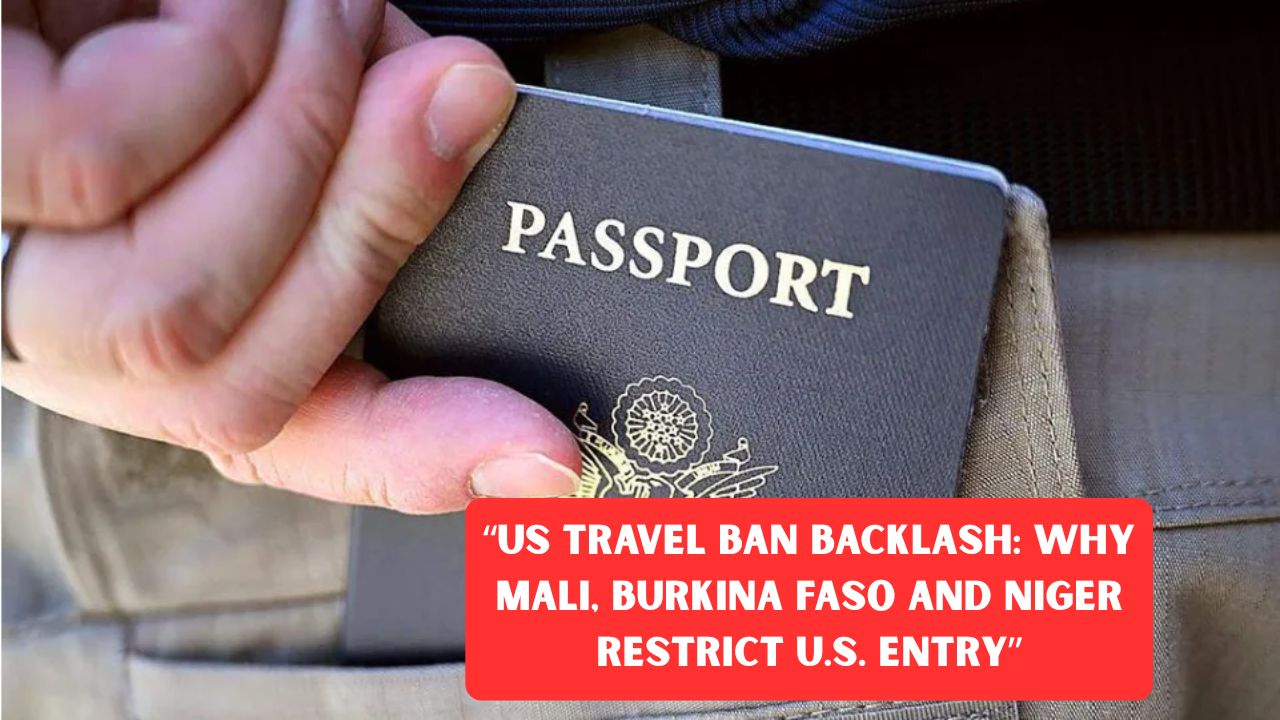
The geopolitical landscape of West Africa is currently undergoing a seismic shift, marked by a sharp “visa war” between the United States and the Alliance of Sahel States (AES). On January 1, 2026, a series of reciprocal travel bans officially took effect, creating a diplomatic stalemate that has effectively shuttered borders to thousands of travelers. This escalation was triggered by the U.S. administration’s decision in mid-December 2025 to expand its travel ban list, citing national security concerns and “severe deficiencies” in the screening and information-sharing protocols of several African nations. In a swift display of sovereign defiance, Mali, Burkina Faso, and Niger responded by invoking the “principle of reciprocity,” imposing equivalent restrictions on American citizens.
The Catalyst: U.S. Presidential Proclamation 10998
The current friction stems from the White House’s move to tighten immigration controls following security incidents in late 2025. The U.S. government argued that nations like Mali, Burkina Faso, and Niger failed to meet minimum requirements for identity management and the sharing of public safety data. Under the new American policy, nearly 40 countries now face varying degrees of entry restrictions. For the Sahelian nations, this was viewed not as a technical administrative adjustment, but as a punitive political tool. Washington’s justification—that these countries are unable to vet citizens who may “intend to threaten” Americans—has been met with deep resentment by the military-led governments in Bamako, Ouagadougou, and Niamey.
Diplomatic Retaliation and the Principle of Reciprocity
In the world of international relations, reciprocity is a cornerstone of sovereignty. When the U.S. announced its full-entry ban on Malian and Burkinabe citizens, the response was coordinated and immediate. The Malian Ministry of Foreign Affairs stated that it would apply the “same conditions and requirements” to U.S. nationals that were imposed on its own people. This “tit-for-tat” strategy is designed to signal that these nations will no longer accept unilateral mandates from Western powers. By matching the severity of the U.S. restrictions, the Sahelian states are asserting their diplomatic equality on the global stage, even as they face significant economic and security challenges at home.
| Country | U.S. Action Taken | Retaliatory Action | Effective Date |
| Mali | Full Entry Ban | Complete Ban on U.S. Citizens | Jan 1, 2026 |
| Burkina Faso | Full Entry Ban | Equivalent Visa Restrictions | Jan 1, 2026 |
| Niger | Full Entry Ban | Suspension of all U.S. Visas | Dec 25, 2025 |
| Chad | Full Entry Ban | Visa Issuance Halted | June 2025 |
The Rise of the Alliance of Sahel States (AES)
To understand why these three countries have reacted so uniformly, one must look at the formation of the Alliance of Sahel States. Having distanced themselves from the regional bloc ECOWAS and traditional Western allies like France and the U.S., these military-led administrations have forged a new path of “national dignity.” The travel ban backlash is a symptom of a much broader geopolitical realignment. As they pivot away from Washington, these nations have increasingly looked toward alternative security partners, such as Russia, to address the ongoing jihadist insurgency in the region. The travel restrictions serve as a symbolic divorce from a decades-long security partnership with the United States.
Security Deficiencies vs. Sovereign Rights
The U.S. government maintains that its restrictions are purely a matter of national security. Officials point to the high presence of armed groups linked to al-Qaeda and the Islamic State in the Sahel as a primary reason for vetting difficulties. However, the governments of Mali and Burkina Faso argue that these decisions were made “without the slightest prior consultation” and do not reflect the actual security improvements made on the ground. From their perspective, the U.S. ban is an attempt to exert leverage over their domestic political choices. This clash of narratives—security versus sovereignty—is the heart of the current diplomatic crisis.
Economic and Humanitarian Implications
While the political statements are loud, the human cost is mounting. The mutual bans have disrupted more than just tourism; they have halted educational exchanges, business investments, and family reunions. In Mali and Burkina Faso, where the tourism industry was a burgeoning source of income through cultural heritage sites and national parks, the absence of American travelers will be felt in the local economies. Furthermore, while official diplomatic channels remain open in a limited capacity, the suspension of routine visa services makes it nearly impossible for NGOs and humanitarian workers to navigate the region effectively, potentially worsening the humanitarian situation in areas already stressed by conflict.
A New Era of Global Mobility
As 2026 progresses, the “visa war” shows no signs of cooling. The international community is watching closely as mobility becomes a primary battleground for geopolitical influence. The Sahelian response represents a growing trend where nations in the Global South reject “unilateral branding” by Western powers. For travelers, the takeaway is a more fragmented world where a passport’s power is increasingly subject to the shifting sands of political alliances. Whether these bans lead to renewed negotiations or a permanent fracturing of ties remains to be seen, but for now, the gates between the United States and the heart of the Sahel remain firmly shut.

FAQs
Q1. Can U.S. citizens still travel to Mali or Niger for emergencies?
Currently, most routine travel is prohibited. Exceptions are extremely limited and typically restricted to rare diplomatic cases or humanitarian missions that receive direct approval from the respective military juntas.
Q2. Why did the U.S. include these specific countries in the ban?
The U.S. government cites “severe deficiencies” in these countries’ ability to share information regarding terrorism and to verify the identities of their citizens, which Washington considers a risk to national security.
Q3. Is there a timeline for when these restrictions will be lifted?
There is no fixed expiration date. The U.S. administration has stated that restrictions will remain until the affected governments demonstrate “credible improvements” in security cooperation and data sharing.
Disclaimer
The content is intended for informational purposes only. you can check the officially sources our aim is to provide accurate information to all users.